AI NEWS
Anthropic Just Acquired a Computer-Use Startup, Cursor's Agents Write 30% of Their Own Code, and Google Merged ALL Its AI Creative Tools Into One
Anthropic acquires Vercept for computer-use agents, Cursor's AI writes 30% of its own code, and Google merges all creative AI tools into Flow.
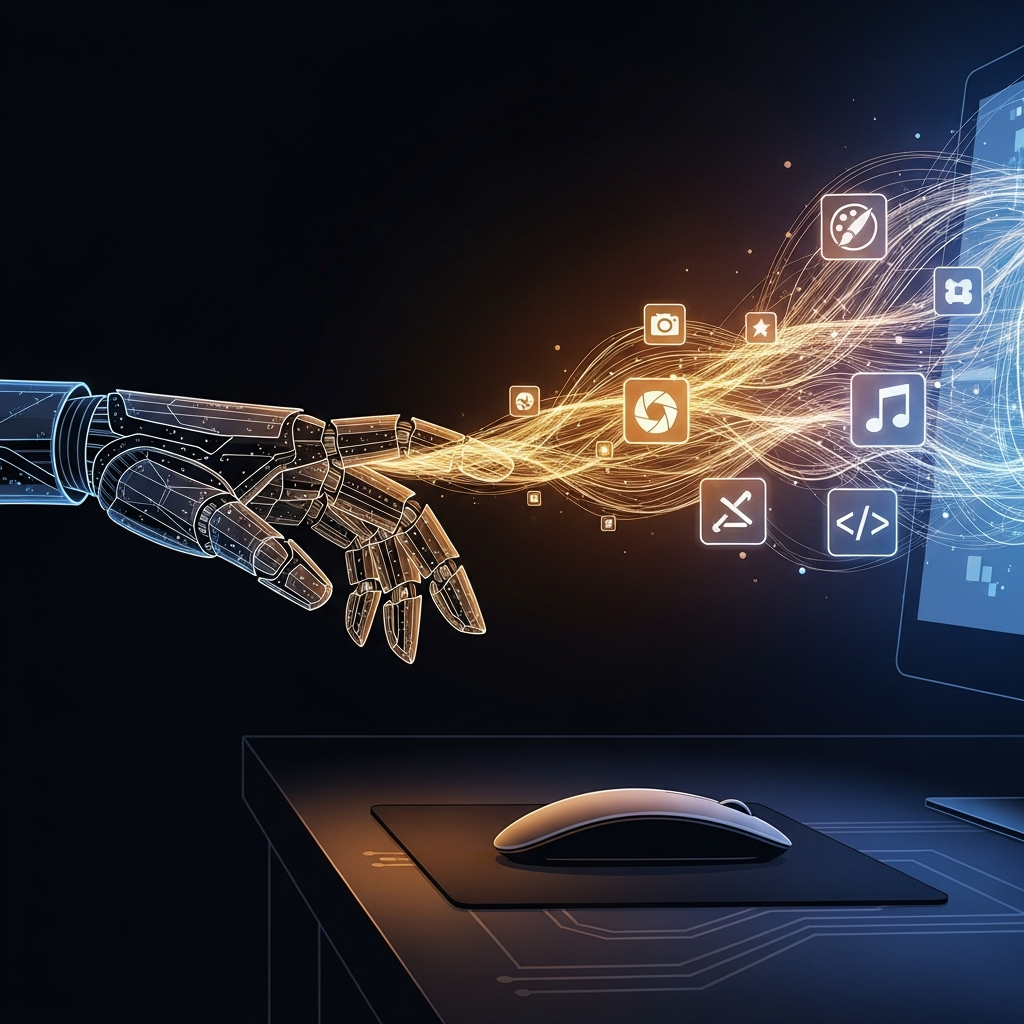
The AI landscape shifted hard in the last 24 hours. Three separate moves - from Anthropic, Cursor, and Google - are each significant on their own. Together, they paint a clear picture: 2026 is the year AI stops assisting and starts operating.
Here's what happened, why it matters, and what it means if you're running a business.
1. Anthropic Acquires Vercept - Claude Is Learning to Use Your Computer
What happened: Anthropic quietly acquired Vercept, a Seattle-based AI startup that built computer-use agents. Vercept's flagship product, Vy, was a cloud-based agent that could operate a remote MacBook - clicking, typing, navigating apps - like a human sitting at the keyboard. As part of the deal, Vercept's product shuts down March 25, and the team folds into Claude.
Why it matters: This isn't a talent acquisition disguised as a product buy. Vercept built exactly the technology Anthropic needs to make Claude's computer-use capabilities production-ready. Claude already had experimental computer-use features, but Vercept's team brings battle-tested agent infrastructure for controlling desktop applications autonomously.
The timing is deliberate. Meta reportedly poached one of Vercept's co-founders before the deal closed - a sign that every major lab is racing to own the "AI that can use software" space.
What it means for businesses: Computer-use agents are the bridge between "AI that answers questions" and "AI that does your job." Imagine telling Claude to log into your CRM, update 50 client records, generate invoices, and email them out - all without you touching a mouse. That future just got closer. At Fusion Data Co, we've been building automation pipelines with Claude's API for months. This acquisition signals that the next generation of those tools will be dramatically more capable.
2. Cursor's AI Agents Now Write 30% of the Company's Own Code
What happened: Cursor, the AI-powered code editor that's become the weapon of choice for developers, dropped a major agent upgrade. The headline stat is staggering: more than 30% of the pull requests Cursor merges internally are now created by autonomous AI agents running in cloud sandboxes. These aren't autocomplete suggestions. These are agents that take a task description, spin up a virtual machine, write code across multiple files, run tests, and submit the finished work for review.
Why it matters: Cursor is eating its own cooking - and the recipe works. When a coding tool company trusts AI agents to write nearly a third of its own production code, that's not a demo. That's proof of concept at scale.
The upgrade positions Cursor's background agents as direct competition to Anthropic's Claude Code, OpenAI's Codex, and even Windsurf. The AI coding tool war is no longer about who has the best autocomplete - it's about who can deploy the most reliable autonomous coding agents.
What it means for businesses: If you're still writing every line of code by hand - or paying developers who are - you're already behind. The math is simple: autonomous agents handling 30% of code output means faster shipping, fewer bottlenecks, and lower costs. We use Claude Code and Cursor daily at Fusion Data Co for client projects. This update makes the "should we use AI coding tools?" question irrelevant. The question is now "which ones, and how many?"
3. Google Merges Whisk, ImageFX, and Nano Banana Into Flow - One AI Creative Studio
What happened: Google announced a major expansion of Flow, its AI video generation tool. The update absorbs Whisk (AI image remixing), ImageFX (text-to-image generation), and fully integrates Nano Banana (high-quality image generation and editing) into a single unified workspace. Starting in March, users can transfer all existing projects and assets from Whisk and ImageFX directly into Flow.
Why it matters: Google has been running multiple AI creative tools in parallel - a confusing landscape for users. This consolidation is Google saying: "One tool to rule them all." Flow now handles text-to-image, image editing, image-to-video, and video editing in one interface. That's a direct shot at Midjourney, DALL-E, Runway, and every other fragmented creative AI tool.
The Nano Banana integration is particularly interesting for businesses. It enables high-quality visual generation and editing within the same pipeline where you're creating video content - no more bouncing between five different tools.
What it means for businesses: Content creation just got consolidated. If your marketing team is juggling Midjourney for images, Runway for video, and Canva for editing, Google is betting you'd rather do it all in one place. For agencies and small businesses producing daily content, this could cut production time significantly. We use fal.ai's model catalog (including Veo and Imagen) for client content at Fusion Data Co - Google unifying its creative stack validates the approach of having one pipeline instead of twelve.
4. Google Gemini Goes Agentic - Books Ubers and Orders Groceries
What happened: Google announced that Gemini AI on Samsung's new Galaxy S26 and Pixel devices can now perform real-world actions autonomously. We're talking booking an Uber ride, assembling a grocery order, suggesting apps based on screen context ("Nudges"), and handling multi-step tasks across apps without user intervention.
Why it matters: This is the clearest mainstream signal yet that AI assistants are transitioning from "answer my question" to "do my task." Google isn't just integrating Gemini deeper into Android - they're making it an operating layer that sits on top of your apps and acts on your behalf.
Samsung's Galaxy Unpacked event yesterday showcased the S26 lineup with these features front and center, alongside privacy-focused hardware like a built-in Privacy Display.
What it means for businesses: If Google's AI can book rides and order food for consumers, the business equivalent is coming fast: AI agents that can schedule meetings, process orders, update inventory, and handle customer requests without human intervention. The infrastructure for autonomous business agents is being built right now in the consumer space.
5. Alibaba Launches Dirt-Cheap AI Coding Tools Built on Qwen 3.5
What happened: Alibaba's cloud division launched affordable AI coding tools built on its open-source Qwen 3.5 model, with a lite version starting at just $1.15/month. The platform lets developers switch freely between models from Alibaba, Zhipu AI, Moonshot AI, and MiniMax - creating a multi-model coding environment at a fraction of Western pricing.
Why it matters: The AI coding tool market is going global and going cheap. While Cursor charges $20/month and GitHub Copilot sits at $10/month, Alibaba is offering functional alternatives for roughly a dollar. This won't immediately threaten Western tools for English-speaking developers, but it signals massive price compression ahead.
Qwen 3.5 supports agentic tasks, multimodal inputs (text, photo, video), and is designed to compete with frontier Western models. The open-source nature means these capabilities trickle into every developer's toolkit eventually.
What it means for businesses: Price pressure on AI tools is good for everyone buying them. As competition intensifies between Cursor, Claude Code, Codex, and now Alibaba's offerings, expect better tools at lower prices. For businesses building with AI, the cost of entry keeps dropping.
The Pattern: AI Is Becoming the Operator
Every story today points in the same direction. Anthropic is buying computer-use technology. Cursor's agents are writing production code autonomously. Google is consolidating creative tools and making Gemini act independently on your phone. Alibaba is making AI coding accessible to everyone on the planet.
The era of AI as a passive tool is ending. The era of AI as an active operator is beginning.
For businesses, the playbook is simple:
1. Adopt AI coding tools now - the gap between AI-assisted teams and manual teams is widening every week
2. Prepare for AI agents - not chatbots, but agents that can log in, navigate software, and complete multi-step workflows
3. Consolidate your creative stack - fragmented tools are losing to unified AI platforms
4. Watch the pricing - competition is driving costs down across every category
Fusion Data Co builds with these tools every day. Claude, Cursor, Gemini, fal.ai, ElevenLabs - they're not buzzwords on our website, they're in our daily workflow building real products for real businesses. If you want AI working FOR your business, not just reading about it: fusiondataco.com or call (916) 507-4160.