Engineering
The Antigravity Workflow: Why Agentic IDEs Are Replacing Static Code Editors
We're witnessing the death of the static code editor. Not because VS Code got worse, but because the job of software engineering has fundamentally changed. Here's why Antigravity and OpenClaw are the new standard.
title: "The Antigravity Workflow: Why Agentic IDEs Are Replacing Static Code Editors"
date: "2026-02-11"
category: "Engineering"
tags: ["Vibecoding", "Antigravity", "AI Agents", "Developer Productivity"]
excerpt: "We're witnessing the death of the static code editor. Not because VS Code got worse, but because the job of software engineering has fundamentally changed. Here's why Antigravity and OpenClaw are the new standard."
featuredImage: "/character/blog/blog-13.png"
author: "Robert Yeager"
readingTime: "5 min"
The Antigravity Workflow: Why Agentic IDEs Are Replacing Static Code Editors
I remember the first time I used VS Code. It felt like magic compared to Sublime Text - IntelliSense, integrated terminal, extensions. It was the peak of the "static editor" era. But looking back from 2026, it feels like chiseling stone tablets.
We are currently living through the most significant shift in software development since the invention of the compiler. The transition isn't just about better tools; it's about a fundamental change in the verb of our profession. We are moving from writing code to steering intelligence.
At Fusion Data Co., we've fully embraced this shift. We call it the Antigravity Workflow.
The Death of the Static Editor
For decades, the "Integrated Development Environment" (IDE) was a misnomer. It wasn't integrated with your intent; it was just a fancy text editor with a debugger attached. You were the sole driver, typing every character, making every micro-decision, and holding the entire system architecture in your head RAM.
That model is broken. The complexity of modern distributed systems, combined with the sheer volume of boilerplate required to build them, has exceeded human cognitive bandwidth.
Enter Antigravity.
Antigravity isn't just an editor; it's an Agentic IDE. It doesn't just wait for you to type; it proactively understands your project structure, your dependencies, and your intent. It's not "autocomplete on steroids" - it's a pair programmer that actually knows the codebase better than you do.
OpenClaw: The Engine Under the Hood
The secret sauce behind our workflow isn't just the UI - it's OpenClaw.
OpenClaw is the operating system for agentic coding. It provides the tooling protocol that allows AI models to interact with the file system, run commands, and manage state safely.
In a traditional workflow, if you wanted to refactor a component, you'd have to:
- Find all references.
- Manually update imports.
- Check for type errors.
- Run tests.
In the OpenClaw ecosystem, this is an atomic operation. You don't "do" the refactor; you request it.
"OpenClaw turn the
UserCardcomponent into a polymorphic component that acceptsasprop."
The agent (running on OpenClaw) reads the file, understands the AST, modifies the code, updates the call sites, runs the TypeScript compiler to verify safety, and presents you with the diff. Your job shifts from mechanic to architect.
From Coding to Vibe-Steering
This brings us to the core philosophy: Vibecoding.
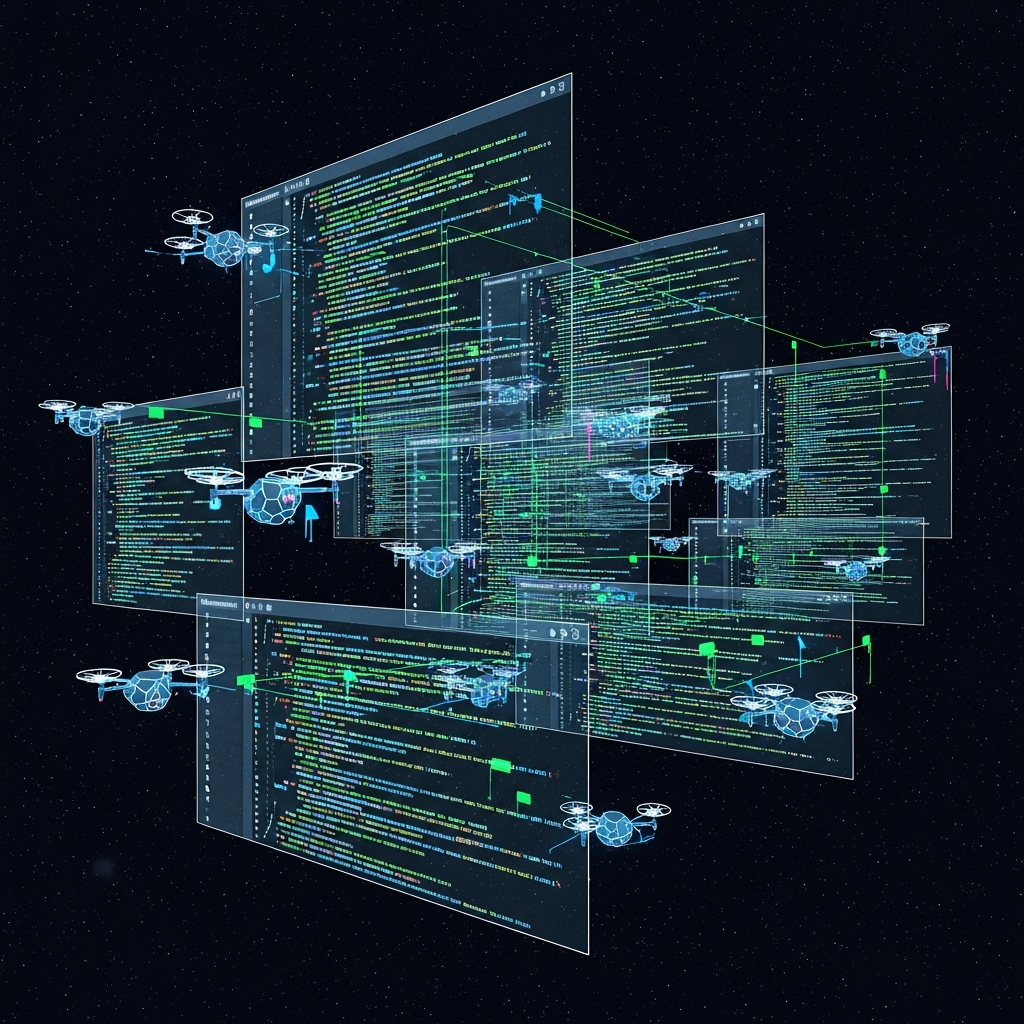
Vibecoding is the art of maintaining flow state while directing a swarm of sub-agents to execute the implementation details. It requires a different set of skills:
- Prompt Engineering as Architecture: Defining clear boundaries and interfaces in natural language.
- Review over Authoring: Developing a keen eye for "smells" in AI-generated code.
- System Thinking: Focusing on how modules interact rather than how a specific loop is written.
When you're vibe-steering, you aren't bogged down by syntax errors. You're thinking about data flow, user experience, and business logic. You're operating at the level of meaning, not syntax.
The 10x Reality
We used to joke about the "10x engineer." With Antigravity and OpenClaw, the 10x engineer isn't a myth - it's the baseline.
When you can delegate the creation of an entire CRUD module to a sub-agent while you focus on the complex authorization logic, your output multiplies. You aren't typing faster; you're thinking bigger.
💡 Vibecoding Tip: Agentic Delegation
Don't let your main context window get clogged with implementation details.
Agentic Delegation: Use sub-agents for file reading and boilerplate, keep the main brain for architecture and decision gates.
If you need to generate a new API endpoint, don't ask the main agent to "write the code." Instead, spawn a sub-agent:
"Create a new sub-agent to scaffold the /api/v1/users endpoint with GET and POST handlers, following the pattern in /api/v1/posts."
This keeps your primary context clean and focused on the high-level "vibe" of the project, while the sub-agent handles the grunt work in its own ephemeral workspace.
Conclusion
The static code editor had a good run. It served us well. But we're building starships now, not canoes.
The Antigravity workflow isn't just about speed; it's about joy. It returns the joy of creation to engineering by stripping away the tedium of syntax. It lets us be what we always wanted to be: Builders.
Welcome to the future. It's heavy.
Robert Yeager is the Lead Architect at Fusion Data Co. and a pioneer in agentic workflows.